
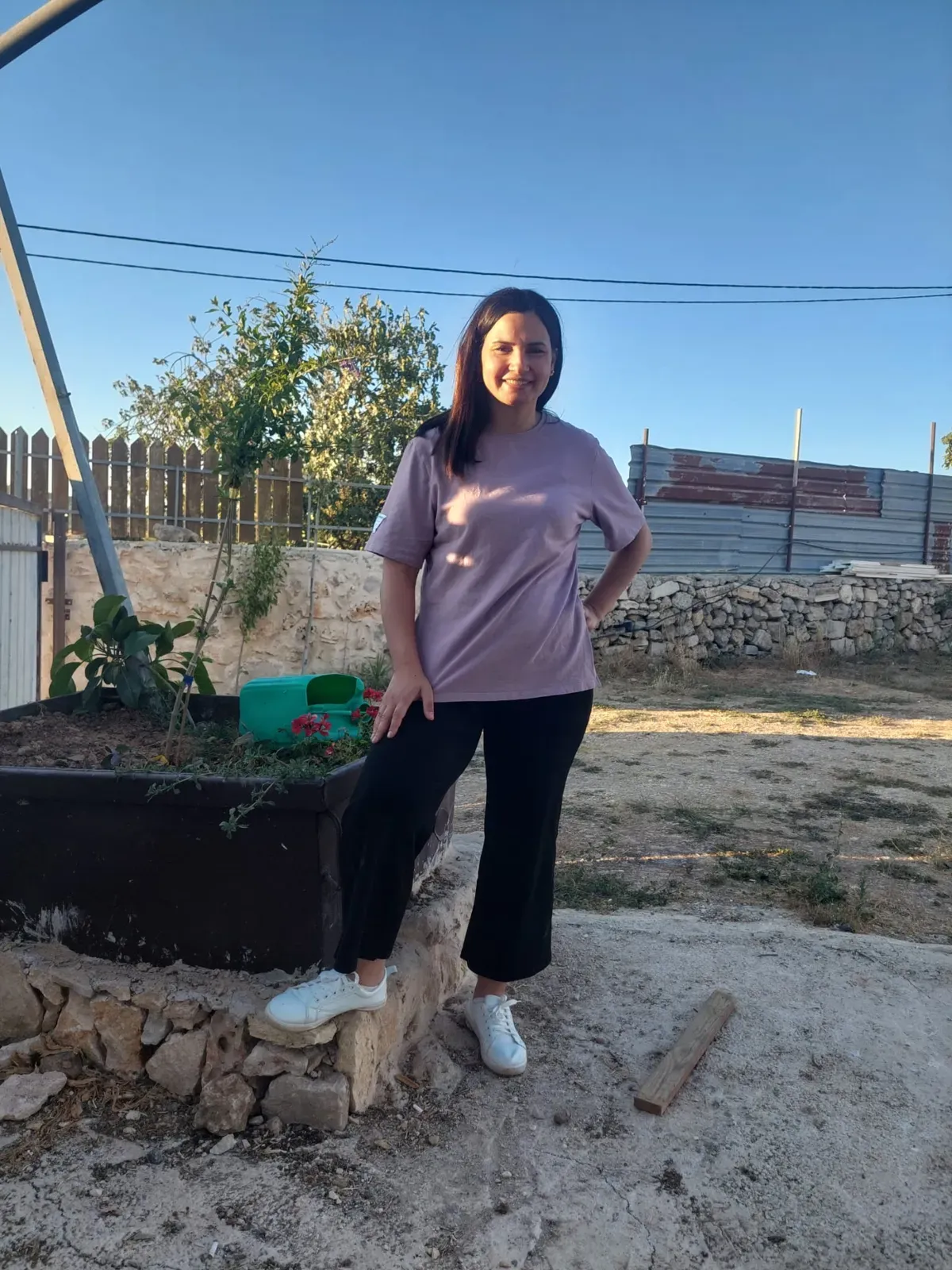
The Root of the Idea: Resilient Agriculture
In April 2017, out of the deep-seated challenges faced by Palestinian farmers—especially those residing in rural areas and camps—the idea for the "Sahber" (Cactus) Juice project was born. The prickly pear cactus, a plant culturally and historically integrated into the landscape of Palestine, was identified as the ideal crop. Requiring minimal water, resistant to high heat, and naturally robust, it serves as an excellent crop for the future. The project focuses on producing a premium, 100% natural, additive-free energy drink with zero added sugar directly from this hardy plant.
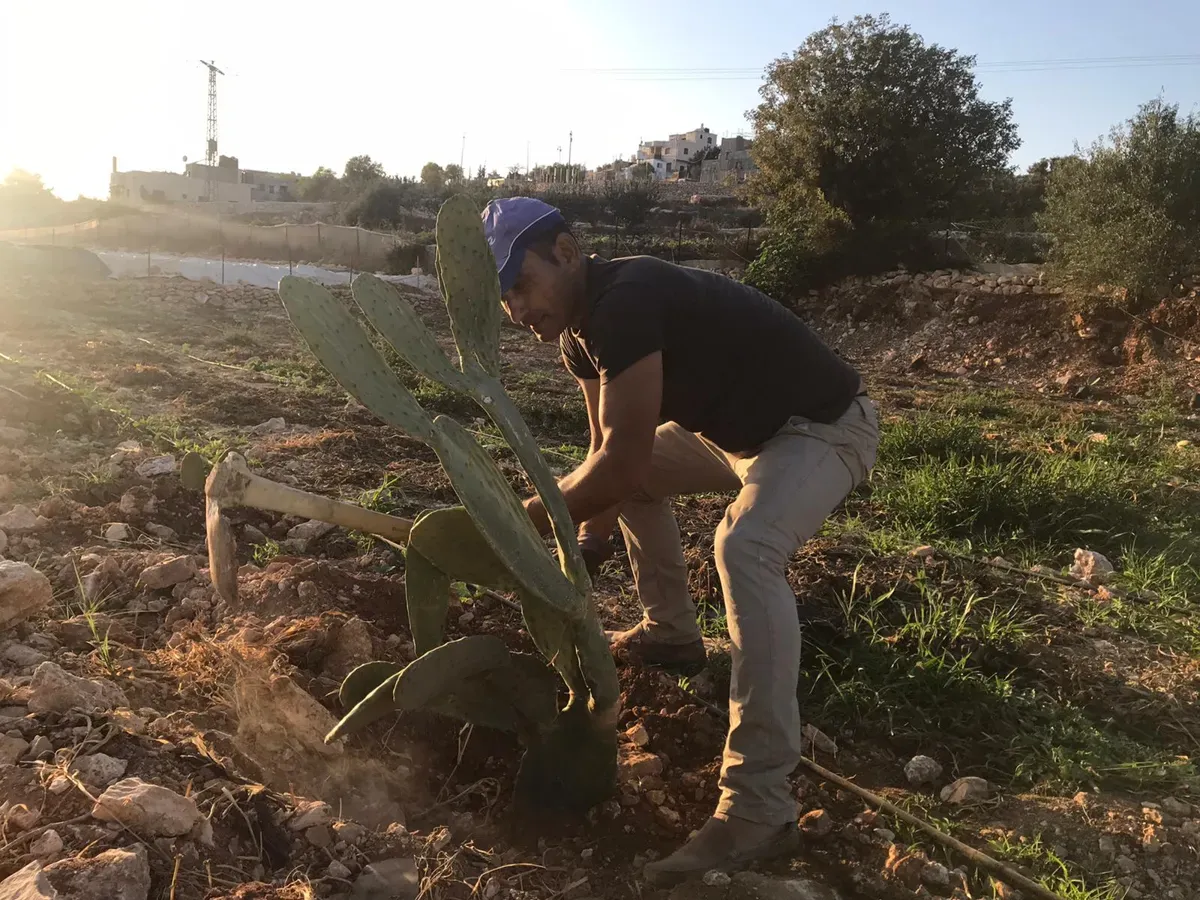
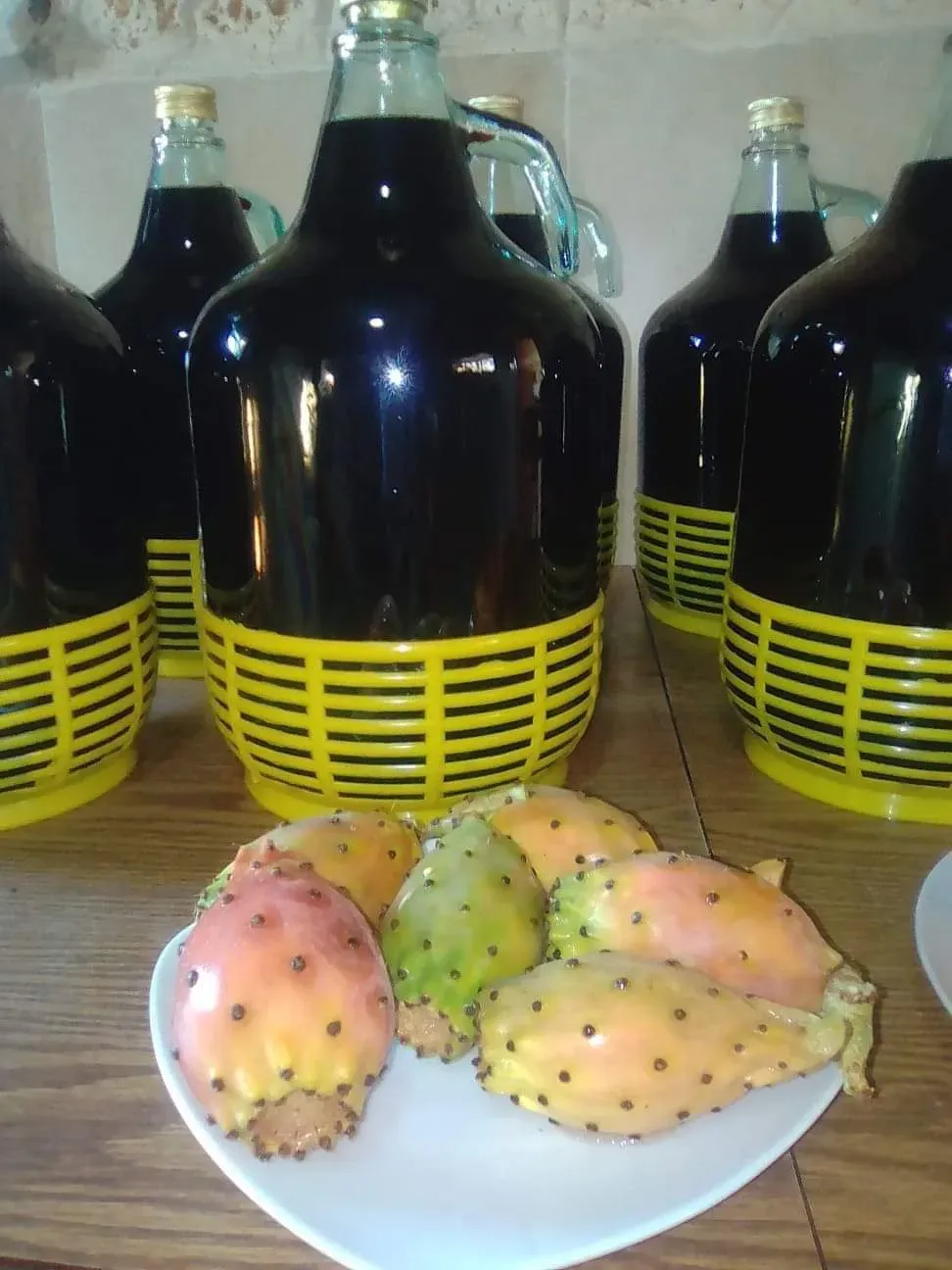
Mousa Abu Maria, representative of the Center for Freedom and Justice (CFJ), worked on the rugged hillside of Beit Ummar to plant cactus paddles. This hands-on groundwork laid the physical foundation of the agricultural fields, reclaiming the land and securing raw materials directly from local farms.
Razan Abu Ayyash: Merging Design with Women's Empowerment
As the farming expanded, the manufacturing process required professionalization. Razan Abu Ayyash, a local graduate specializing in Design, stepped in to lead this transformation. Combining her creative eye with intensive technical and food-processing training—both locally and internationally, including in Germany—Razan took charge of upgrading the production standard, building a sanitary processing environment, and directly empowering local women.
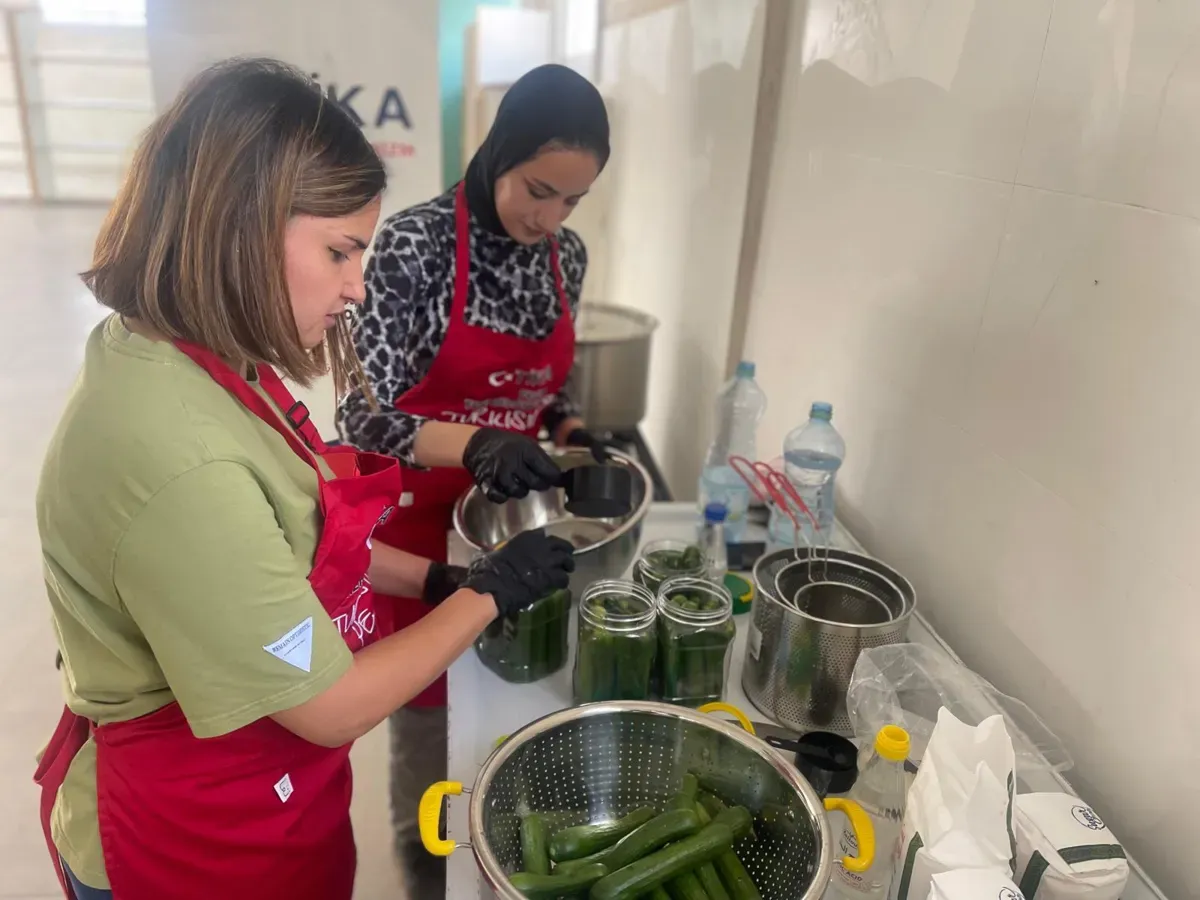
The portfolio shows Razan inspecting the bottling consistency of the cactus juice, alongside locally hired women managing preparation stations with safety aprons and gloves. It documents a transition toward skilled, dignified, cooperative female-led local employment.
Cultural Pride: Connecting Youth and Elders to the Land
The project is more than an economic venture; it is a cultural movement. It preserves the cultural landscape of Palestine and encourages the younger and older generations alike to protect their environment. By showcasing local icons in traditional heritage, the brand bridges generations and builds a profound sense of regional identity and collective pride.
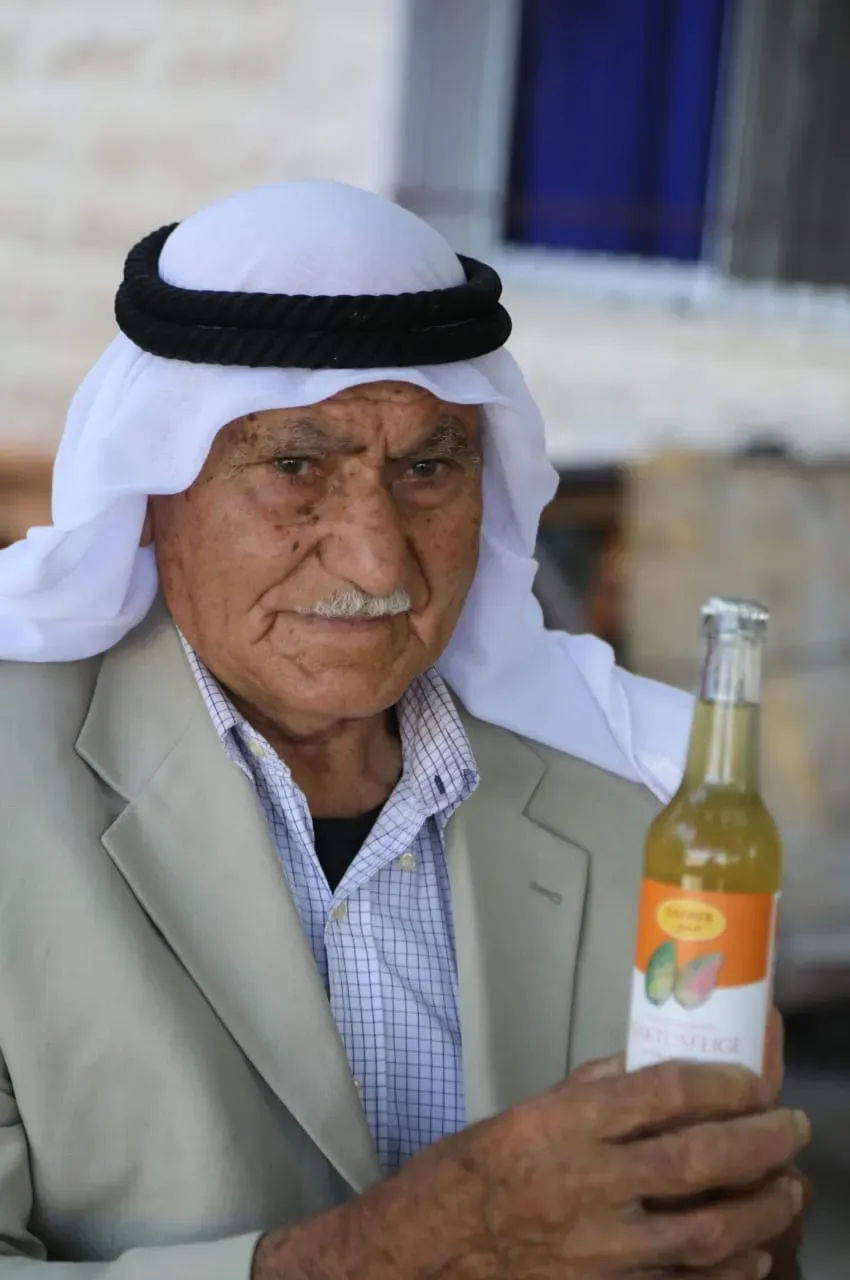
The portfolio includes a Palestinian elder from Beit Ummar, wearing traditional heritage attire and holding a bottle of Sahber. The image symbolizes the generational link between the soil of Palestine and the innovative future crafted by the town's youth.
The Packaging Evolution: From Local to Global Standards
A key pillar of the design upgrade led by Razan was transforming how the product is packaged. Initially, the juice was stored in industrial-sized generic white plastic containers suited mostly for regional wholesale. Under professional design direction, the product evolved into premium individual glass bottles featuring a polished, multilingual label that clearly markets the juice as a natural, highly nutritional Palestinian energy drink.
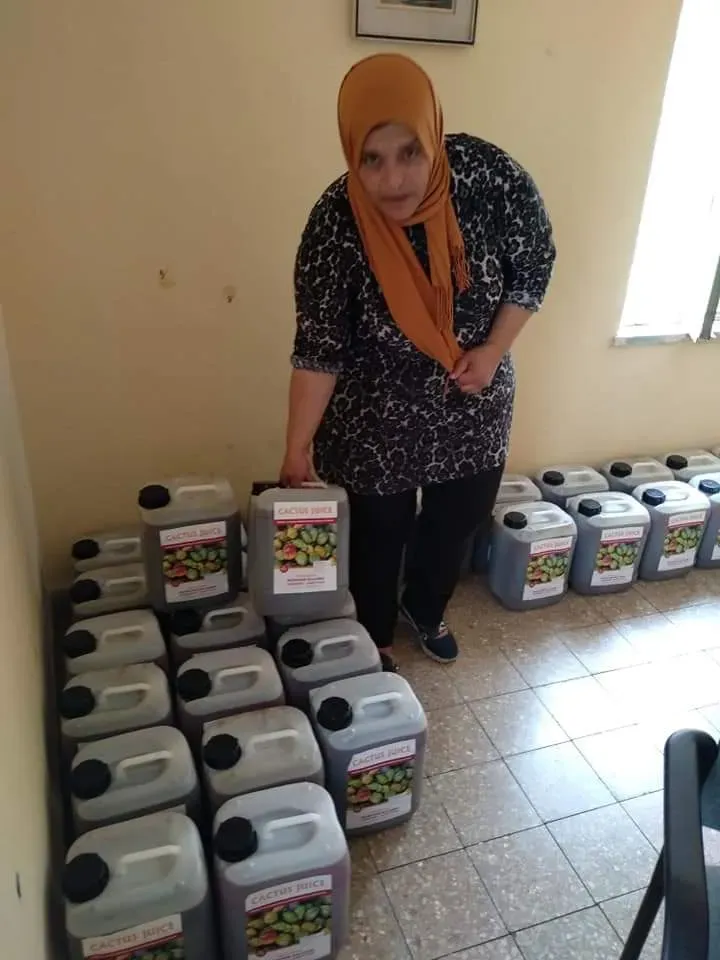
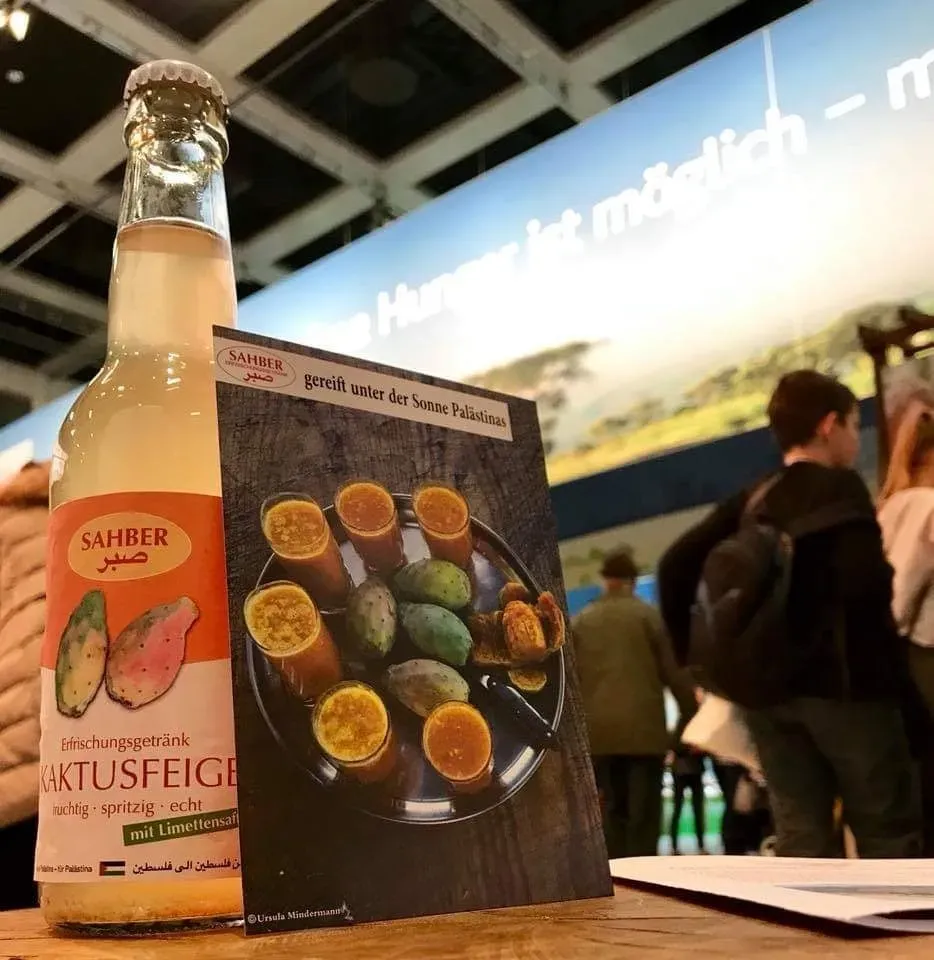
The portfolio presents this development side by side: large plastic containers previously used for transport and branded 330ml glass bottles of "Sahber Kaktusfeige" juice.
Reaching Global Markets: The International Connection
The refinement of the juice enabled its successful entry into European markets, specifically Germany. Refined and marketed as a premium health drink, "Sahber" is praised by international consumers for its rich content of vitamins, potassium, calcium, magnesium, and essential amino acids (proline), making it highly favored as a natural sports and recovery energy drink.
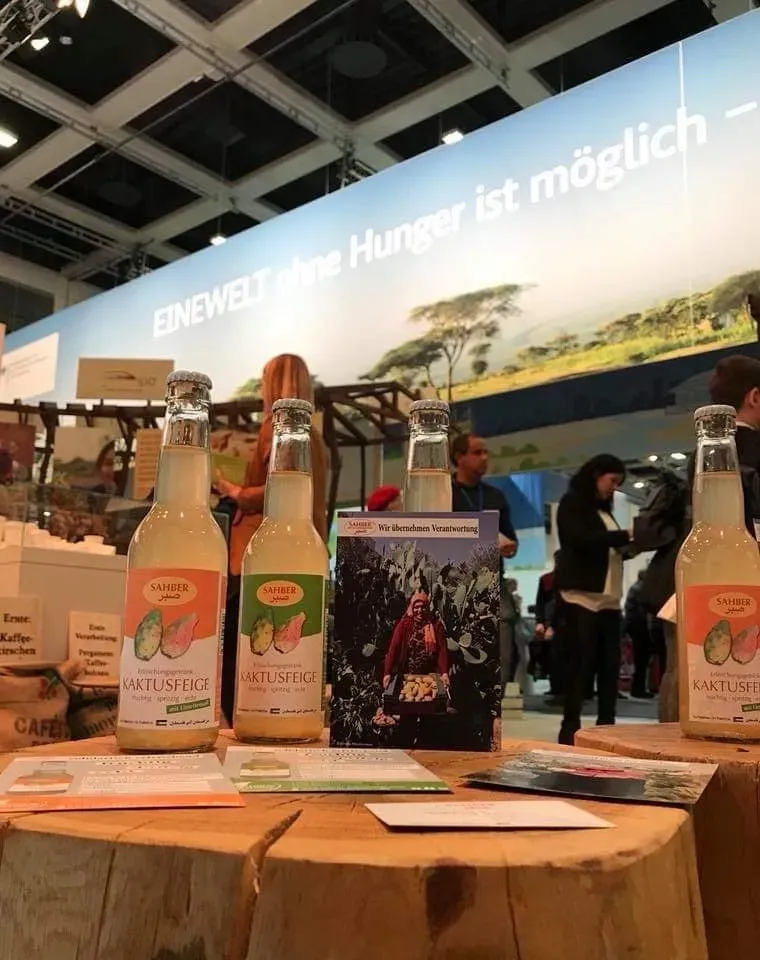
At an international food fair in Germany, Sahber was showcased with German-language product leaflets introducing Razan Abu Ayyash as the designer behind the initiative and sharing the story of Beit Ummar with visitors.
Key Community Benefits
- Sustainable Livelihoods: Creates fair-trade jobs for local farmers and women in Beit Ummar, Surif, Jericho, and the Rashaida region.
- Heritage Preservation: Protects and revives culturally valuable cactus farming across rural landscapes.
- International Reinvestment: Proceeds from German sales are reinvested directly back into local health, education, and development projects in Palestine.
View the Complete Story
View the complete Sahber success story and photographs (PDF, English)